
01 Nov Lithium Battery Fire Safety
Why Traditional Fire Extinguishers Fail Against Lithium-Ion Battery Fires: The Science Behind Thermal Runaway Protection
Lithium-ion battery fires present a unique challenge that traditional fire extinguishers cannot effectively address. Traditional extinguishers fail against lithium-ion battery fires because these batteries self-oxidize and generate their own oxygen, making conventional suppression agents like water, foam, and dry chemicals powerless against the thermal runaway process.

The increasing prevalence of lithium-ion batteries in everything from smartphones to electric vehicles has created new fire safety concerns that existing suppression methods were not designed to handle. These fires burn at extremely high temperatures and can reignite even after appearing to be extinguished, creating dangerous situations for both property and personnel.
Understanding why conventional fire suppression fails requires examining the fundamental differences between standard fires and lithium-ion battery incidents. This analysis explores the specific mechanisms behind battery fires, the limitations of traditional suppression methods, real-world incidents, and emerging solutions that address these critical safety gaps.
Understanding Lithium-Ion Battery Fires
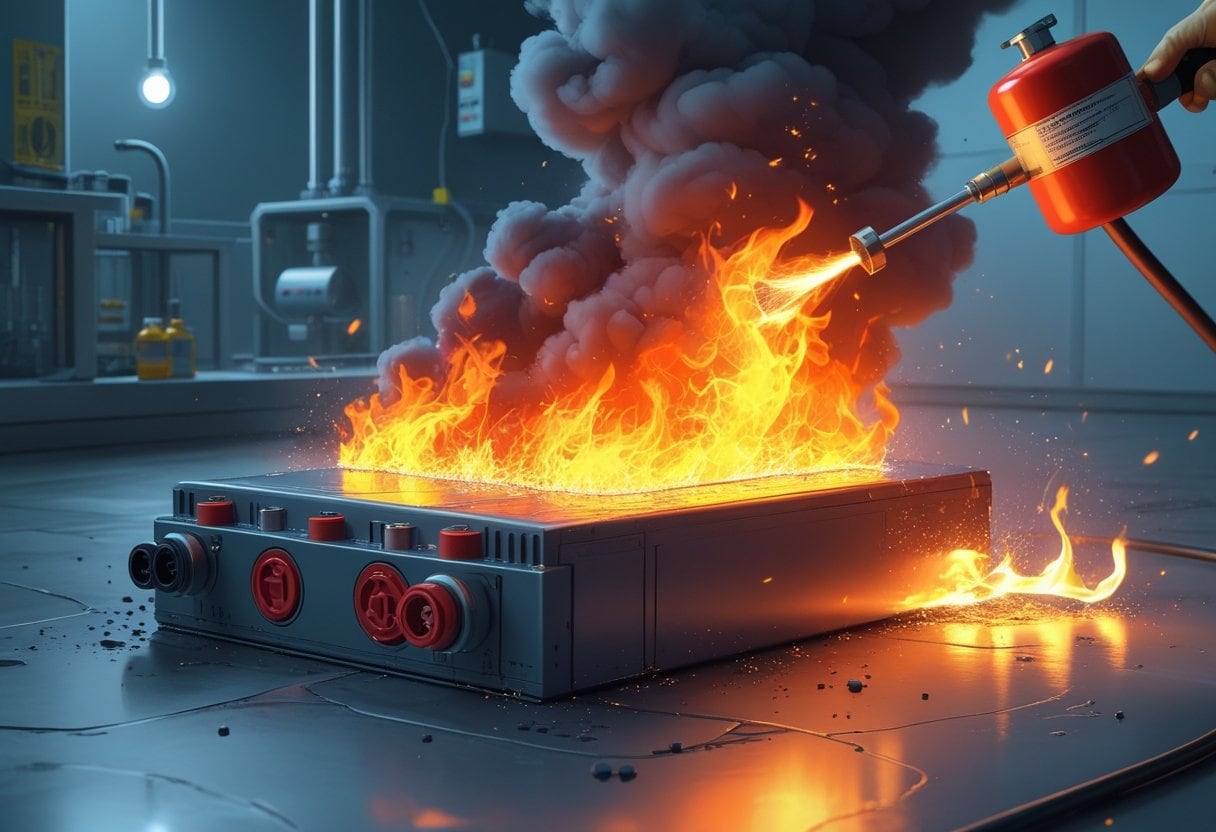
Lithium-ion batteries contain highly reactive materials that generate intense heat and toxic gases when they malfunction. These fires progress through distinct phases and can reignite even after appearing extinguished.
Key Properties of Lithium-Ion Batteries
Lithium-ion batteries store energy in electrolyte solutions containing lithium salts and organic solvents. The electrolyte becomes highly flammable when exposed to heat or physical damage.
These batteries operate at voltages between 3.2V to 4.2V per cell. Multiple cells are often grouped together, creating battery packs with hundreds of volts.
Energy density in lithium-ion batteries ranges from 150-250 Wh/kg. This concentrated energy creates intense heat when released rapidly during thermal events.
The separator membrane between electrodes breaks down at temperatures above 130°C (266°F). Once compromised, internal short circuits generate additional heat and sustain the fire.
Lithium-ion batteries contain toxic materials including:
- Lithium hexafluorophosphate
- Cobalt compounds
- Nickel compounds
- Organic carbonates
Common Causes of Thermal Runaway
Physical damage from crushing, puncturing, or dropping can breach the battery casing. This exposure allows oxygen to react with internal components and creates immediate fire risk.
Overcharging forces excess energy into the battery beyond its capacity. The extra energy converts to heat, raising internal temperatures above safe operating limits.
Manufacturing defects include faulty separators, contaminated materials, or improper assembly. These defects create weak points that fail under normal operating conditions.
Extreme temperatures above 60°C (140°F) accelerate chemical reactions inside the battery. High ambient temperatures can trigger thermal runaway even in undamaged batteries.
Age-related degradation weakens internal components over time. Older batteries become more susceptible to thermal runaway from minor stress or normal use.
Stages of a Lithium-Ion Battery Fire
Stage 1: Heat Generation begins when internal temperatures reach 130-160°C. The battery swells as gases build up inside the casing.
Visible signs include battery expansion, unusual odors, and surface temperatures above normal ranges. The battery may still appear functional during this initial stage.
Stage 2: Gas Venting occurs when internal pressure forces toxic gases through safety vents. These gases are highly flammable and can ignite from nearby heat sources.
Vented gases include hydrogen fluoride, carbon monoxide, and various organic compounds. Smoke production increases significantly during this phase.
Stage 3: Fire Ignition happens when vented gases reach ignition temperature or encounter an open flame. Temperatures can exceed 1000°C (1832°F) within seconds.
The fire burns intensely and spreads rapidly to adjacent battery cells. External flames may appear orange or blue depending on the burning materials.
Stage 4: Propagation spreads thermal runaway to neighboring cells in multi-cell battery packs. Each affected cell releases additional energy and toxic gases.
This cascading effect makes lithium-ion battery fires extremely difficult to control. The fire can continue burning for hours even with active suppression efforts.
Mechanisms of Traditional Fire Extinguishers
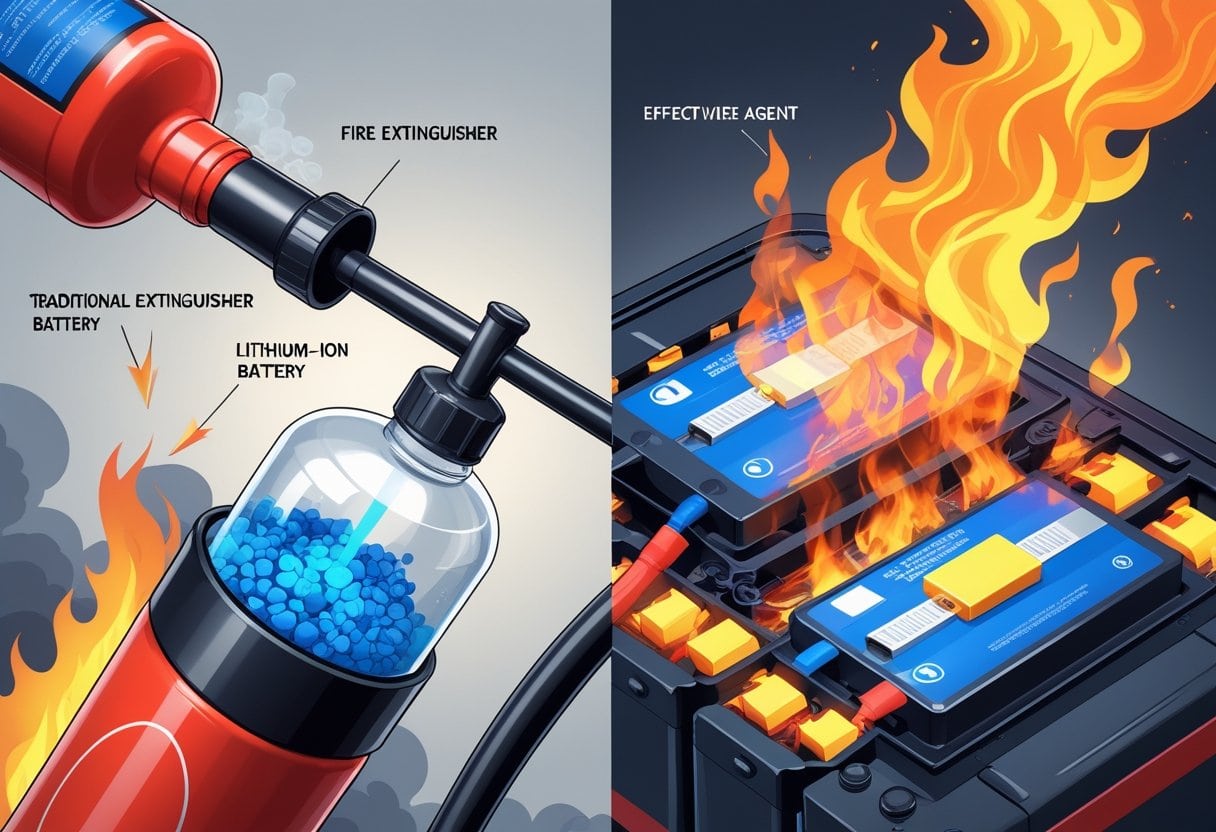
Traditional fire extinguishers operate through four primary suppression methods: removing heat, eliminating oxygen, creating barriers between fuel and flame, or disrupting chemical reactions. Each extinguisher type targets specific fire classes using distinct agents and delivery mechanisms.
How Water-Based Extinguishers Work
Water extinguishers suppress fires primarily through cooling and dilution. When water contacts burning materials, it absorbs substantial heat energy during vaporization, reducing temperatures below ignition points.
The cooling effect occurs because water has a high specific heat capacity of 4.18 kJ/kg°C. This means water absorbs significant thermal energy before reaching its boiling point of 100°C.
Steam production creates a secondary suppression effect. As water vaporizes, it expands approximately 1,700 times its original volume, displacing oxygen around the fire source.
Water also dilutes flammable liquids when miscible, reducing vapor concentrations below combustible levels. The liquid creates a barrier between fuel surfaces and flames.
Key mechanisms:
- Heat absorption through vaporization
- Steam displacement of oxygen
- Fuel dilution and separation
- Surface cooling of materials
Water extinguishers work effectively on Class A fires involving ordinary combustibles like wood, paper, and fabric.
Principles of CO2 Extinguishers
Carbon dioxide extinguishers suppress fires through oxygen displacement and limited cooling effects. CO2 gas is stored under high pressure as a liquid at approximately 850 psi.
When discharged, liquid CO2 rapidly expands into gas, creating immediate cooling through the Joule-Thomson effect. This expansion reduces temperatures to approximately -78°C at the nozzle.
The primary suppression mechanism involves reducing oxygen concentration below combustion-supporting levels. Normal air contains 21% oxygen, but combustion becomes difficult below 16% and typically stops below 12%.
CO2 is 2.5 times denser than air, allowing it to settle over fire sources and maintain oxygen displacement. The gas provides no residue after discharge, making it suitable for electrical equipment.
Suppression characteristics:
- Oxygen displacement: Primary mechanism
- Cooling effect: Secondary benefit
- Residue-free: No cleanup required
- Electrical safety: Non-conductive
CO2 extinguishers target Class B flammable liquids and Class C electrical fires effectively.
Functionality of Dry Chemical Extinguishers
Dry chemical extinguishers use powdered agents that interrupt combustion through multiple mechanisms. The most common agents include monoammonium phosphate, sodium bicarbonate, and potassium bicarbonate.
Chemical interference represents the primary suppression method. Dry chemicals release free radicals when heated, which combine with combustion radicals and break the chain reaction necessary for sustained burning.
The powder creates physical barriers by coating fuel surfaces and separating them from oxygen. This smothering effect prevents vapor release from liquid fuels.
Heat absorption occurs as chemicals decompose, though this provides less cooling than water-based systems. Some agents like monoammonium phosphate leave residues that help prevent re-ignition.
Agent types and applications:
- ABC powder: Multi-purpose for most fire classes
- BC powder: Flammable liquids and gases
- Purple-K: High-efficiency potassium bicarbonate
Dry chemicals discharged through pressurized nitrogen or carbon dioxide propellant systems, creating powder clouds that blanket fire areas.
Why Traditional Extinguishers Are Ineffective for Lithium-Ion Battery Fires
Traditional fire extinguishers fail against lithium-ion battery fires due to fundamental chemical incompatibilities and the unique self-sustaining nature of thermal runaway reactions. Standard extinguishing agents cannot penetrate battery cells or interrupt the exothermic processes that drive these fires.
Chemical and Physical Limitations
Water-based extinguishers create dangerous reactions when applied to lithium-ion batteries. Water conducts electricity, increasing electrocution risks when batteries remain energized. The reaction between water and lithium compounds can produce hydrogen gas, creating explosion hazards.
Carbon dioxide extinguishers prove inadequate because lithium-ion fires generate their own oxygen through electrolyte decomposition. The CO₂ cannot displace this internal oxygen source. Battery fires burn at temperatures exceeding 1,000°F, which CO₂ cannot sufficiently cool.
Dry chemical extinguishers using sodium bicarbonate or monoammonium phosphate face similar limitations. These agents cannot penetrate sealed battery cells where the fire originates. The chemicals may temporarily suppress external flames but cannot reach internal chemical reactions.
Foam extinguishers also fail to penetrate battery housings effectively. The foam cannot form proper seals around cylindrical or prismatic cells. Battery fires continue burning internally while foam only addresses surface flames.
Reignition Risks and Exothermic Reactions
Lithium-ion battery fires demonstrate persistent reignition capabilities that traditional extinguishers cannot prevent. Internal chemical reactions continue even after external flames appear extinguished. These reactions generate heat continuously, causing fires to restart hours or days later.
Thermal propagation spreads between adjacent cells despite extinguisher application. Heat transfers through battery packs faster than traditional agents can cool the materials. One compromised cell triggers cascade failures throughout the entire battery system.
Require Further Assistance with Lithium Battery Fire Safety
please see Lithium-Ion Battery Fire Safety
No Comments