
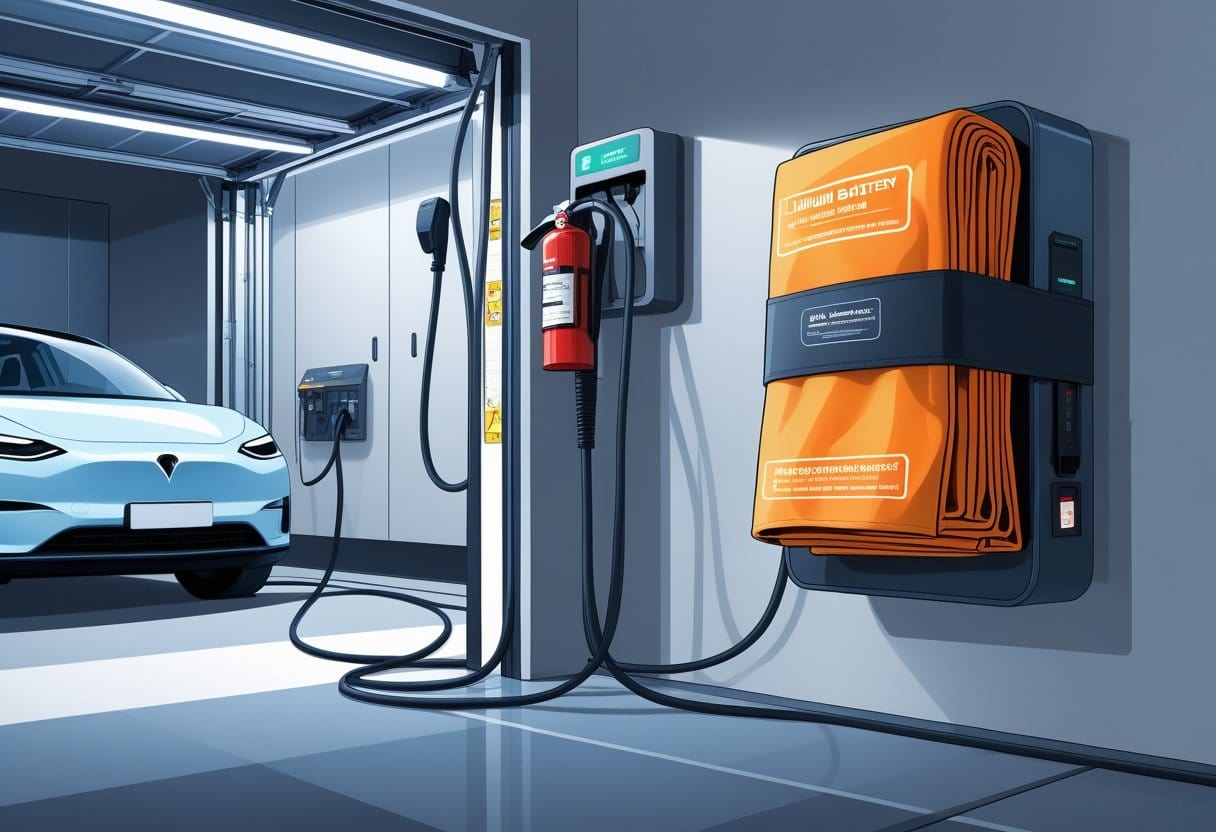
01 Nov Why Every EV Garage Needs a Lithium Battery Fire Blanket: Essential Safety Equipment for Electric Vehicle Owners
Electric vehicle owners face a unique fire hazard that traditional garage safety measures cannot adequately address. Lithium-ion battery fires burn at extreme temperatures, produce toxic gases, and can reignite hours after appearing extinguished. Unlike conventional vehicle fires, these incidents require specialized suppression methods due to thermal runaway reactions that spread rapidly through battery cells.
Every EV garage should be equipped with a lithium battery fire blanket as an essential safety measure to contain these potentially catastrophic fires and protect both property and lives. These specialized blankets work by cutting off the oxygen supply and containing the intense heat generated during thermal runaway events. Standard fire extinguishers and water-based suppression systems often prove ineffective against lithium battery fires.
Understanding the critical importance of proper fire safety equipment becomes essential as electric vehicles continue their rapid adoption across residential garages. The right fire blanket can mean the difference between a contained incident and a devastating structural fire that spreads throughout a home or building.
The Importance of Lithium Battery Fire Blankets in EV Garages
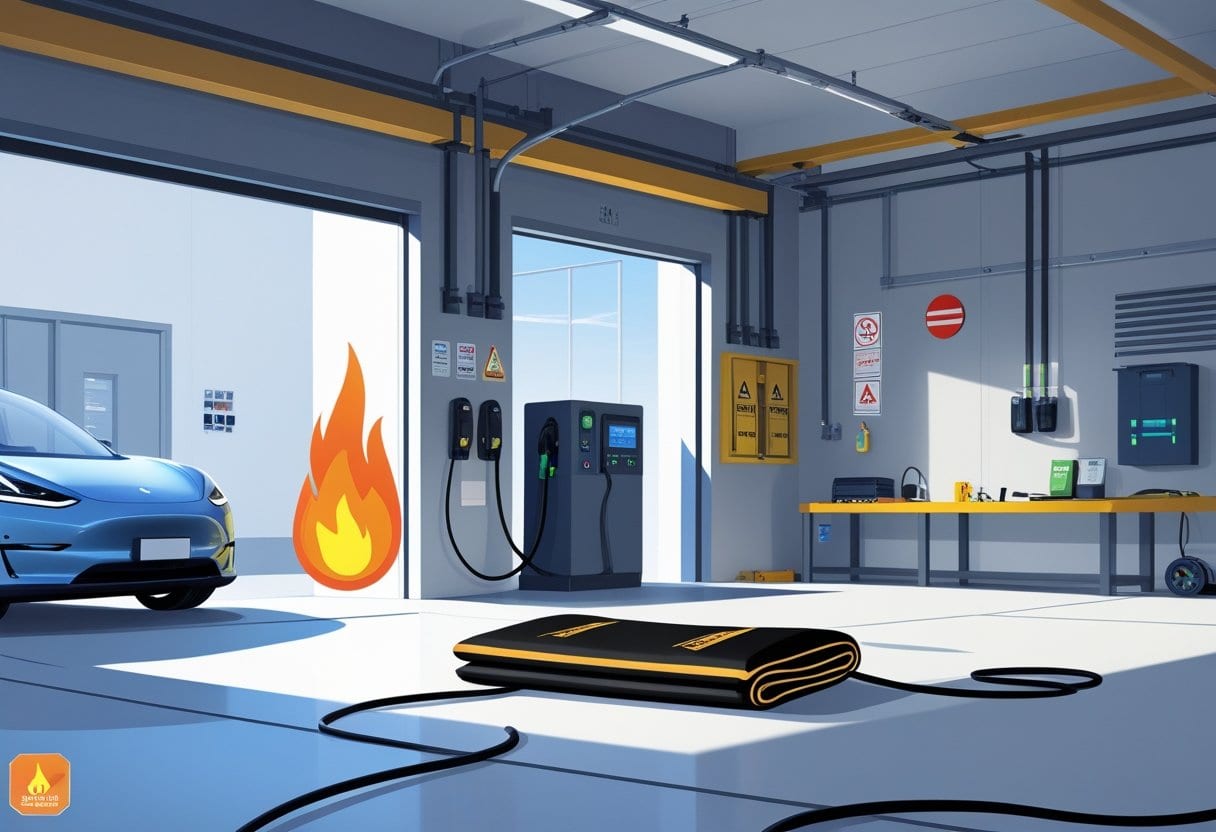
Lithium-ion battery fires in electric vehicles present unique hazards that traditional fire suppression methods cannot effectively manage. Fire blankets provide critical containment by isolating thermal runaway events and preventing fire spread to adjacent vehicles or structures.
Understanding Lithium-Ion Battery Fire Risks
Electric vehicle batteries contain thousands of lithium-ion cells that store significant energy. When these cells malfunction, they create thermal runaway conditions that spread rapidly between cells.
Thermal runaway occurs when a battery cell overheats and triggers a chain reaction. The temperature can reach 1,800°F (980°C) within minutes. This extreme heat ignites neighboring cells and creates an uncontrollable fire.
Key risks include:
- Toxic gas emissions, including hydrogen fluoride
- Intense heat that melts metal components
- Fire reignition hours or days after initial suppression
- Rapid spread to adjacent vehicles
EV fires burn differently from gasoline vehicle fires. Water typically used by firefighters can conduct electricity and prove ineffective against battery fires. The thermal mass of battery packs maintains high temperatures even after flames appear extinguished.
Battery fires release oxygen during combustion, making them self-sustaining. This characteristic allows fires to continue burning even when isolated from external oxygen sources. Garage environments amplify these risks due to confined spaces and proximity to other vehicles.
How Fire Blankets Prevent EV Battery Fires
Fire blankets create an oxygen barrier around burning vehicles to suppress flames and contain heat. These specialized blankets use materials rated for extreme temperatures that lithium-ion batteries generate.
The blanket deployment process involves draping the material over the entire vehicle. This action immediately cuts off the oxygen supply to the fire while containing toxic gases within the covered area. Emergency responders can deploy blankets quickly without requiring water or chemical suppressants.
Fire blanket benefits:
- Temperature resistance up to 2,000°F
- Immediate deployment within 2-3 minutes
- Reusable construction for multiple incidents
- Non-conductive materials are safe around electrical systems
Blankets prevent fire spread to adjacent vehicles by containing heat and flames. This containment protects garage structures and prevents multi-vehicle incidents that could destroy entire facilities.
The isolation effect also reduces toxic gas dispersion throughout enclosed spaces. Garage ventilation systems can better manage contained emissions rather than widespread contamination from uncontrolled fires.
Comparing Fire Blankets to Other Fire Suppression Solutions
Traditional water suppression requires massive volumes to cool battery packs effectively. Fire departments typically need 3,000-8,000 gallons for a single EV fire compared to 300-500 gallons for gasoline vehicles.
Foam suppression systems work on liquid fuel fires but prove less effective on solid lithium-ion fires. The thermal mass of battery packs continues generating heat that breaks down foam barriers and reignites fires.
| Suppression Method | Response Time | Water Required | Reignition Risk |
|---|---|---|---|
| Fire Blankets | 2-3 minutes | None | Low |
| Water Suppression | 15-30 minutes | 3,000+ gallons | High |
| Foam Systems | 10-15 minutes | 1,000+ gallons | Medium |
Chemical suppressants like CO2 or clean agents cannot penetrate battery pack casings to reach burning cells. These systems work on surface fires but fail to address internal thermal runaway conditions.
Fire blankets offer the most practical solution for garage environments. They require no water supply, chemical refills, or complex installation. Property managers can store blankets indefinitely without maintenance requirements that other systems demand.
The portability factor allows blankets to protect any vehicle location within a garage. Fixed suppression systems only cover specific areas and cannot adapt to different parking configurations.
Selecting and Using the Right Lithium Battery Fire Blanket
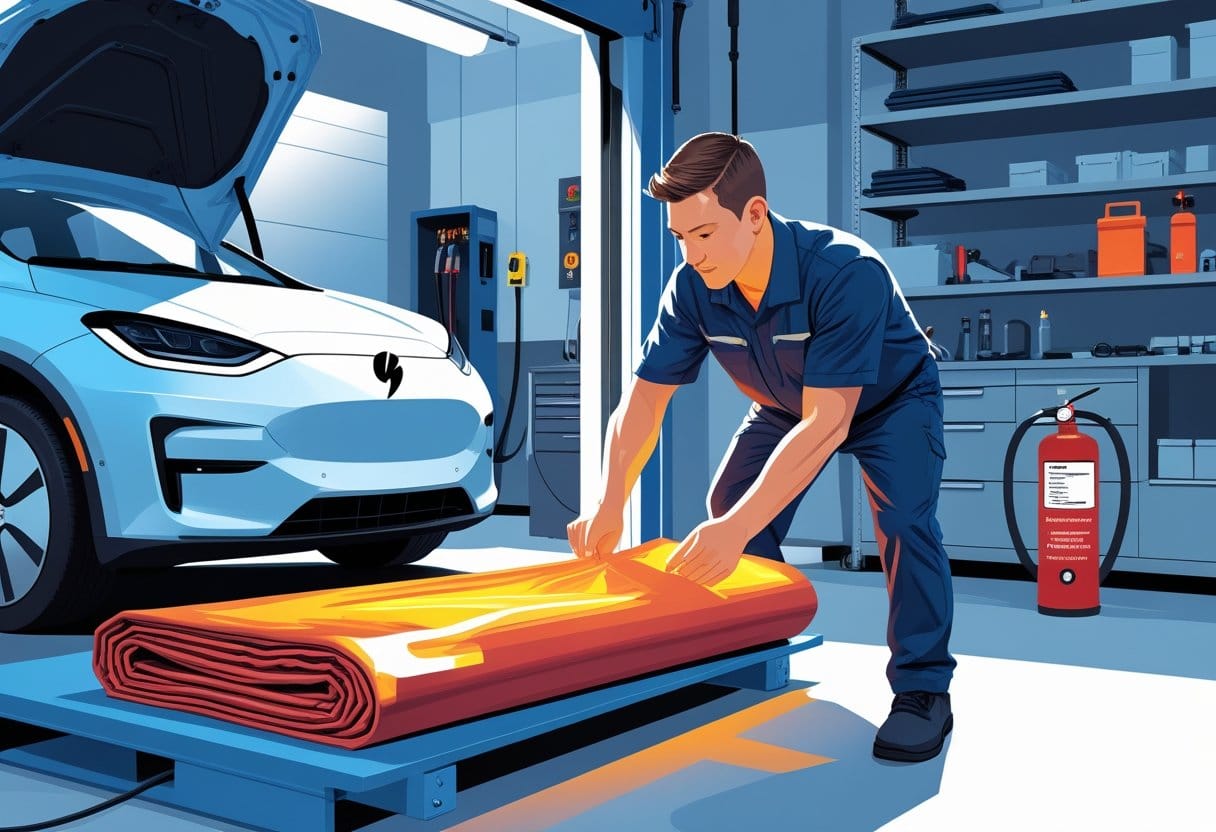
Choosing the appropriate lithium battery fire blanket requires evaluating specific material properties and temperature ratings. Proper storage practices and deployment protocols ensure maximum effectiveness during emergencies.
Key Features to Consider in Fire Blankets
Temperature resistance stands as the most critical specification when selecting a lithium battery fire blanket. High-quality blankets utilize silica glass fibers that withstand temperatures exceeding 1,000°C, which lithium-ion battery fires commonly reach.
The blanket material should incorporate flame deflection coatings and abrasion-resistant surfaces. These features prevent degradation during deployment and maintain structural integrity under extreme heat conditions.
Size specifications directly impact effectiveness during emergencies. Standard EV fire blankets measure 6×8 feet or larger to fully cover most passenger vehicles. Smaller 4×6-foot options work for individual battery packs or charging equipment.
Weight considerations affect deployment speed and user safety. Professional-grade blankets typically weigh 15-25 pounds, requiring proper lifting techniques during emergencies.
Certification standards indicate tested performance levels. Look for blankets meeting EN 1869 or equivalent fire safety standards specifically tested for lithium-ion battery applications.
| Feature | Specification | Importance |
|---|---|---|
| Temperature Rating | 1,000°C+ | Critical |
| Material | Silica Glass Fiber | Essential |
| Size | 6×8 feet minimum | High |
| Weight | 15-25 pounds | Moderate |
Proper Storage and Maintenance for Longevity
Fire blankets require dry, temperature-controlled storage environments to maintain effectiveness. Moisture exposure degrades fiber integrity and reduces thermal protection capabilities over time.
Wall-mounted storage boxes provide immediate access while protecting blankets from environmental damage. These containers should feature clear labeling and quick-release mechanisms for emergency deployment.
Monthly visual inspections identify potential damage or wear patterns. Check for tears, frayed edges, or discoloration that could compromise performance during actual use.
Cleaning procedures vary by manufacturer specifications. Most silica fiber blankets require specialized cleaning methods rather than conventional washing techniques.
Storage temperatures should remain between 10°C and 40°C for optimal fiber preservation. Extreme temperature fluctuations cause material expansion and contraction that weakens protective coatings.
Replacement schedules depend on usage frequency and storage conditions. Professional-grade blankets typically maintain effectiveness for 10-15 years under proper storage conditions.
Safety Protocols for Deploying Fire Blankets in Emergencies
Personal protective equipment must be worn before blanket deployment. Heat-resistant gloves, face protection, and appropriate clothing prevent burns during close-proximity operations.
Approach the fire from an upwind position when possible. This reduces smoke inhalation risks and provides better visibility during blanket placement procedures.
The deployment technique requires complete coverage of the burning vehicle or battery pack. Gaps allow oxygen infiltration that can reignite suppressed flames or maintain combustion.
Two-person deployment improves safety and effectiveness for larger vehicle fires. Coordinated placement ensures proper coverage while maintaining safe distances from thermal hazards.
Monitor the blanket continuously after deployment. Lithium-ion batteries can reignite hours after initial suppression, requiring extended observation periods.
Emergency services notification remains essential even after successful blanket deployment. Professional firefighters possess specialized equipment for complete fire suppression and hazardous material handling.
Sorry, the comment form is closed at this time.