
05 Jan Hydrostatic Test Frequencies for Aviation Gas Cylinders
CASA Regulations
The Civil Aviation Safety Authority (CASA), in accordance with AD/GAS/1/ & AS 2030, requires that all aircraft compressed gas cylinders undergo periodic hydrostatic testing to verify their structural integrity under high-pressure conditions and to ensure they remain free of stress fractures, corrosion, or pitting.
Under Australian standards, different cylinder specifications dictate specific retest intervals and total service life limits:
- Steel Cylinders (e.g., 3AA Equivalent): These must be hydrostatically tested every five years and generally have an indefinite service life, provided they continue to pass inspection.
- High-Strength Steel Cylinders (e.g., 3HT Equivalent): These require testing every three years and are subject to a maximum service life of 24 years from the date of manufacture.
- Composite Cylinders: These lightweight cylinders must be tested every five years and normally carry a maximum service life of 15 years; after which they must be retired from service. The end-of-life date can vary upon the gas cylinder OEM.
– Read More –
CASA requires that all aircraft oxygen cylinders be hydrostatically tested regularly to verify that they can operate under high-pressure circumstances and are free of stress fractures and rust. Different types of oxygen cylinders require varying testing durations and service life criteria:
- 3AA oxygen cylinders: Test once every five years with indefinite service life.
- 3HT oxygen cylinders: Must test every three years with a 24-year service life.
• Composite oxygen cylinders: Implement testing every five years; attention must be prioritised to the end of service life recorded on the cylinder.
Australian Standards
AS2030.5 Cylinders forming part of an Aircraft equipment and used solely in aircraft, other than a reference made in a direction pursuant to the Civil Aviation Regulations.
Gas Cylinders, which are part of aircraft fixed systems, or Gas Cylinders holding a water capacity under 0.1kg or greater than 3000kg, do not fall under Australian Standards AS2030; reference needs to be made back to the Aircraft “CMM” Component Maintenance Manual specified by the Aircraft’s OEM.
AS2030.6 Initial test station inspection and testing
Gas Cylinders, which are required to be filled for the first time within the Commonwealth of Australia, are required to go through an approved gas cylinder test station, be inspected, tested, and certified then have a test station mark stamped onto the gas cylinder.
Gas Refills
All Aviation Gas Cylinders should not undergo gas refills if the test dates have expired, or portable gas cylinders do not bear an Australian Gas Cylinder test mark.
Please note that this only applies to aircraft solely used in the Commonwealth of Australia.
Portable Carry-On Bottles
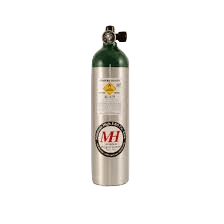
Portable (Carry-On) Oxygen Bottles – Pilot Use
These are typically classified as:
• Portable safety/survival equipment
• Loose equipment or carry-on operational equipment
• Not part of the aircraft’s certified oxygen system
They are distinct from:
• Fixed crew oxygen bottles
• Plumbed oxygen systems
• Installed regulators or distribution systems
Therefore, they are not controlled parts of the aircraft.
Regulatory Treatment (Australia / CASA context)
In Australia, portable oxygen bottles for pilot use are usually treated as:
• Operational equipment
• Dangerous goods (compressed gas) — depending on size and pressure
• Subject to safe carriage and handling rules, not aircraft certification rules
They are not maintained under Part 42 as aircraft components unless:
• The operator voluntarily includes them in their maintenance system, or
• They are required equipment under the aircraft’s MEL or operations manual
Maintenance & Testing
Although not aircraft components:
• They must still be maintained and tested per:
• Manufacturer instructions
• Cylinder standards (e.g. AS 2030 in Australia)
• Dangerous goods / WHS requirements
• Hydrostatic testing and valve inspections still apply
Aluminium, Composite, Steel Gas Cylinders
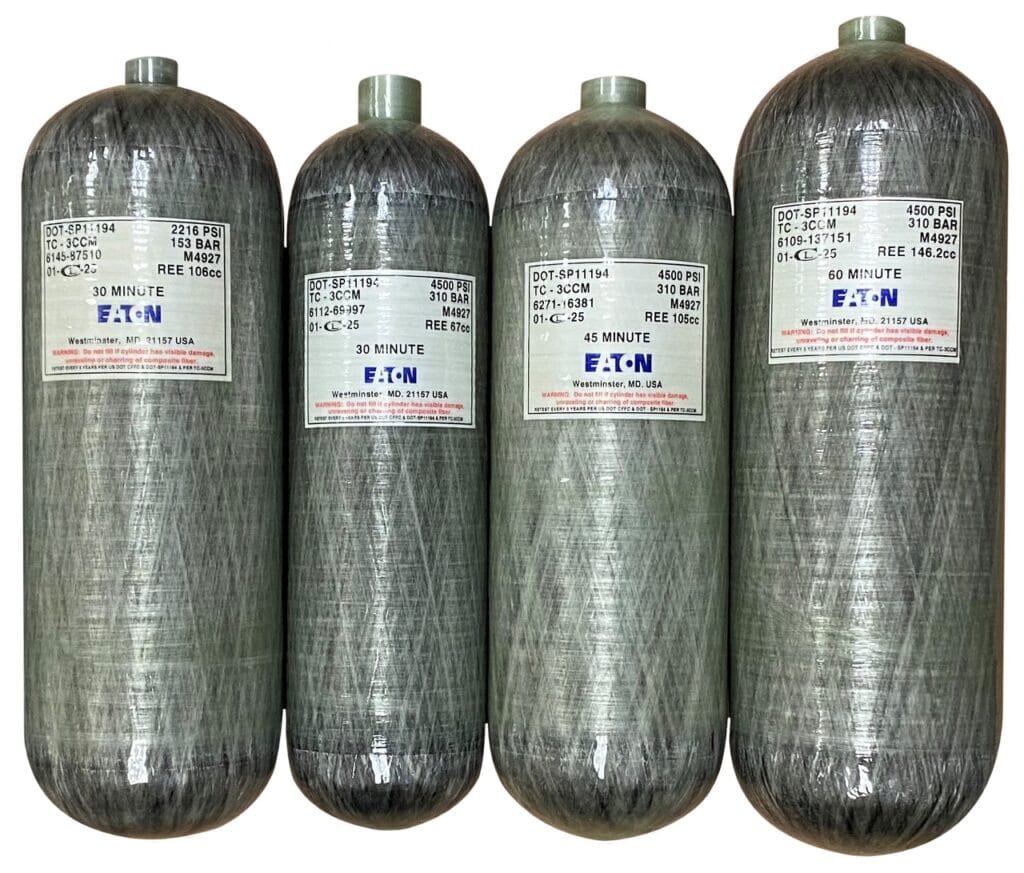
Composite, Steel, Aluminium Aircraft Gas Cylinders
Require retesting in accordance with AS2030 & AS2337, DOT Requirements.
For Composite Gas Cylinders, Attention to detail is required to verify the end-of-life dates on the cylinder.
For Aviation Cylinder Retesting, Inspections, And End-Of-Life Support
Need to know more about Aviation Bottle Testing, Click Here.
If your aviation composite gas cylinder is due for retest, inspection, or you need help determining its end-of-life status, contact Fire System Services. 1300 88 3473
info@firesys.com.au
Fire System Services are aviation-certified and ready to assist.
Sorry, the comment form is closed at this time.