
16 Nov Halotron I vs Halotron BrX: Understanding the Difference in Aviation Portable Fire Extinguishers
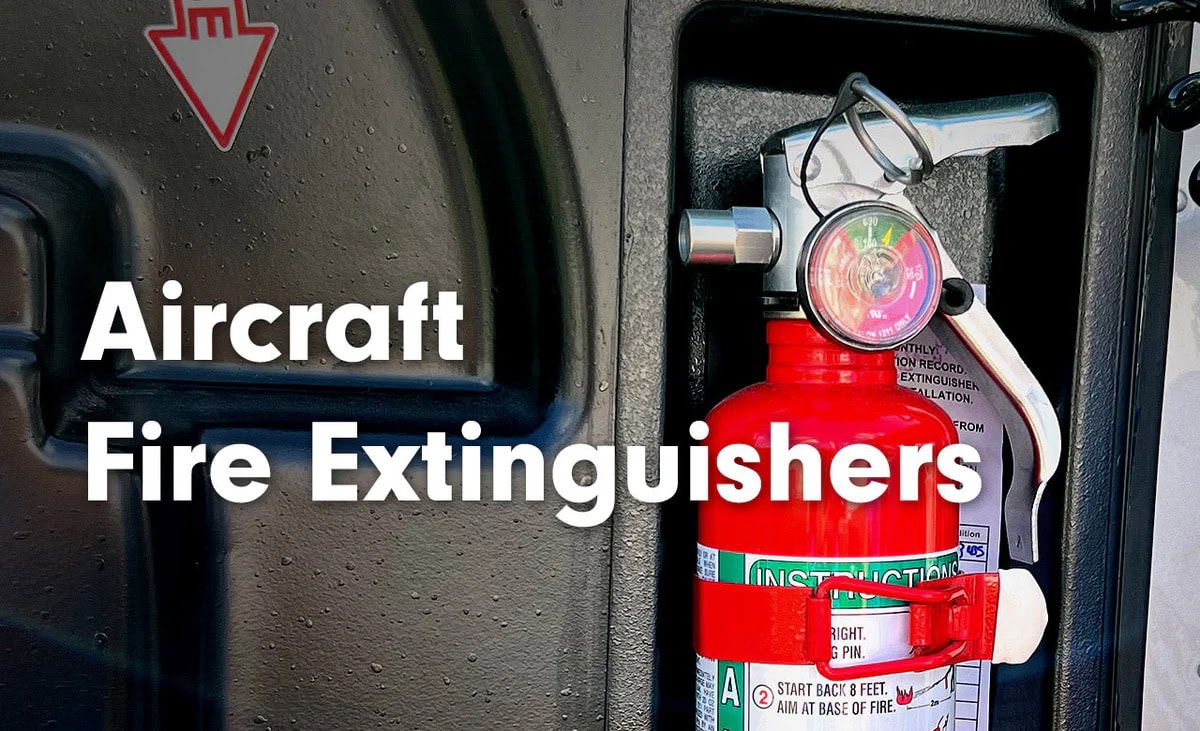
In aviation, clean-agent fire extinguishers are essential for protecting pilots, crew, passengers, and avionics. Two of the most common clean agents today are Halotron I and Halotron BrX. While both are effective for traditional aviation fire risks, they behave differently at altitude and have unique strengths. This guide breaks down the key differences for general aviation users — clearly, practically, and with the right level of technical detail.

1. What Are Halotron I and Halotron BrX?
Halotron I is a proven clean-agent fire suppression gas used globally in aircraft for its non-corrosive, residue-free, low-toxicity characteristics.
Halotron BrX is the newer-generation agent designed to offer better extinguishing efficiency and dramatically lower environmental impact. It is increasingly being adopted by aviation operators seeking lighter equipment and stronger performance.
2. How the Two Agents React at Altitude
Lower atmospheric pressure at altitude significantly affects how gaseous agents behave.
- Halotron I functions well, but can take slightly longer to build effective concentration at very low pressure.
- Halotron BrX vaporises and expands more efficiently, delivering improved flame knockdown performance at altitude.
This makes BrX especially suitable for high-ceiling operations and pressurised cabins at cruise altitude.
3. Fire Suppression Performance
Both agents are effective for:
- Class B (flammable liquid) fires
- Class C (energised electrical) fires
Halotron BrX, however, typically:
- Knocks flames down faster
- Cools surfaces more effectively
- Requires less agent mass for equal performance
- Allows for smaller, lighter extinguishers
4. Important: Halotron Agents Are NOT Effective for Lithium-Ion Battery Fires
Modern aviation increasingly encounters Lithium-Ion battery thermal runaway — from tablets, phones, e-bike batteries, power banks, and onboard equipment.
Halotron I and Halotron BrX cannot stop or extinguish thermal runaway. They can temporarily suppress surface flames but do not cool or interrupt the chemical chain reaction inside the battery.
Air crew needs to act quickly to extinguish carry-on battery fires to immerse this type of fire in water as soon as possible.
This means:
- The fire may reignite repeatedly
- Internal cell temperatures continue to rise
- Only specialized agents like AFFF blends, F-500 Encapsulator Agent, Vermiculite, or water mist cooling effectively manage Lithium-Ion thermal runaway
Aircraft operators should be aware that clean agents are for traditional aviation fires, not Li-Ion battery events, which require cooling, encapsulation, or containment.
5. Environmental Considerations
- Halotron I offers reduced environmental impact compared to older halon systems.
- Halotron BrX significantly lowers global warming potential and meets future environmental compliance requirements more effectively.
For operators planning long-term fleet compliance, BrX is the more future-proof option.
6. Pros & Cons Summary
Halotron I — Pros
- Proven technology
- Widely available
- Cost-effective
- Safe on avionics
Halotron I — Cons
- Higher global warming potential
- Less efficient at altitude
- Not effective for Lithium-Ion battery fires
Halotron BrX — Pros
- Better altitude performance
- Faster extinguishment
- Environmentally preferred
- Lighter extinguisher weight possible
Halotron BrX — Cons
- Higher cost
- Newer product, sometimes limited supply
- Still ineffective for Lithium-Ion battery thermal runaway
7. Aviation Fire Extinguisher Servicing & Compliance

Aviation clean-agent extinguishers must be serviced only by:
✔ EATA Certified clean-agent technicians
✔ CASA/FAA-approved aviation service providers
This includes:
- Recharging
- Halotron refill
- 5-yearly hydrostatic testing
- Aviation-specific compliance checks
For all aviation fire extinguisher maintenance, refills, and testing, contact:
Fire System Services
📞 1300 88 3473
📧 info@firesys.com.au
Certified for Halotron I, Halotron BrX, and full aviation clean-agent servicing.
No Comments